Many services, many doors
e-Brat, BOPM, 190 Integrado and the job board each had their own entry point and their own way of working.

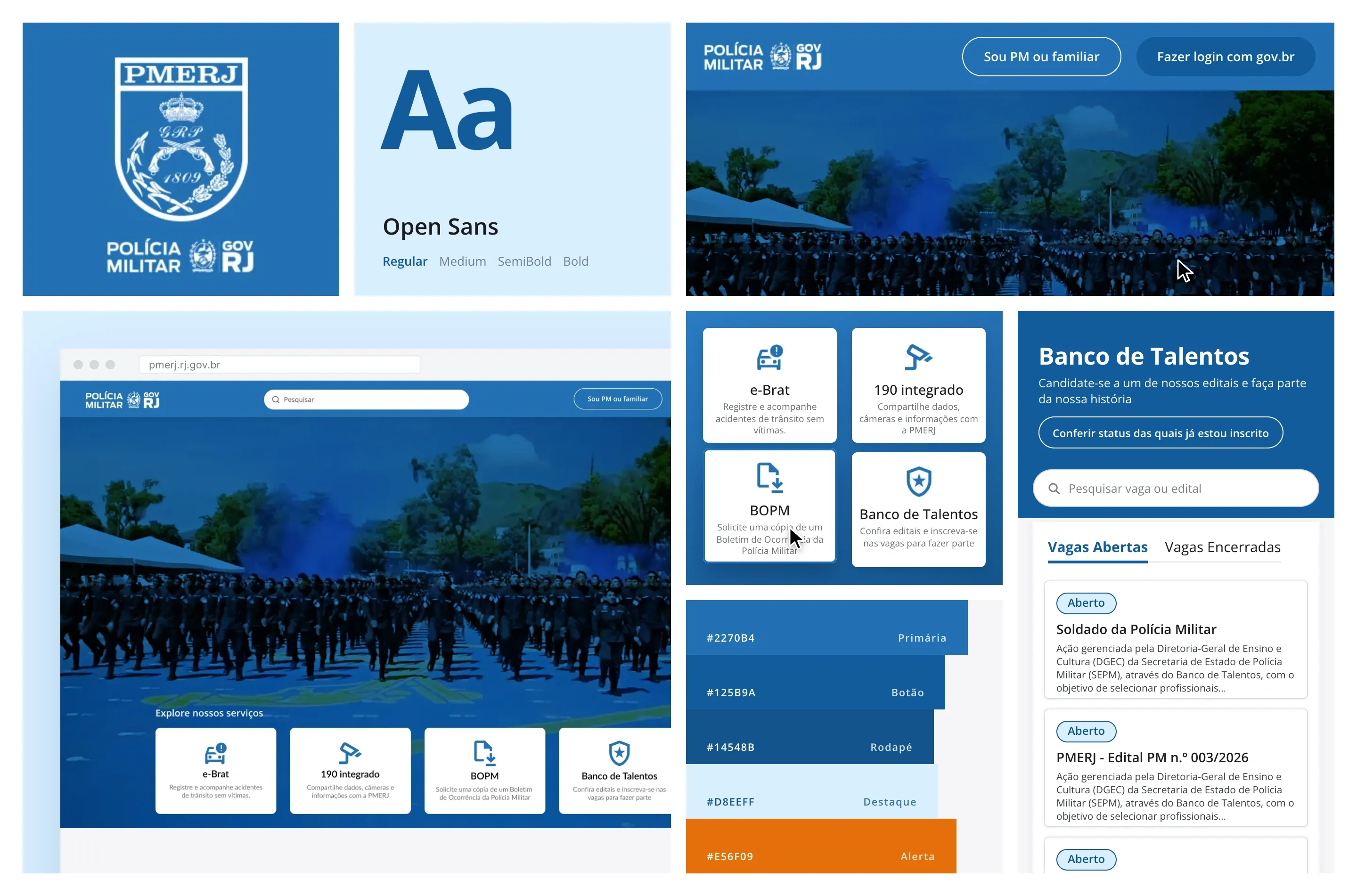
A citizen portal for PMERJ, Rio de Janeiro’s Military Police, bringing online accident reports, police report copies and job openings to one place, with gov.br login and a dedicated area for officers and their families.
The challenge
Citizens looking for a police report copy, an accident record or a job opening at PMERJ had no single place to start. Each service lived on its own.
e-Brat, BOPM, 190 Integrado and the job board each had their own entry point and their own way of working.
Citizens, applicants, and officers with their families all need the portal, with different things to see.
Identification needed to go through gov.br, the federal login people already use for public services.
The process
Listed every service and link the portal had to hold, from forms to phone directory, FAQ and service charter.
Designed a public home, the gov.br login step and a logged-in home with the user’s requests and applications.
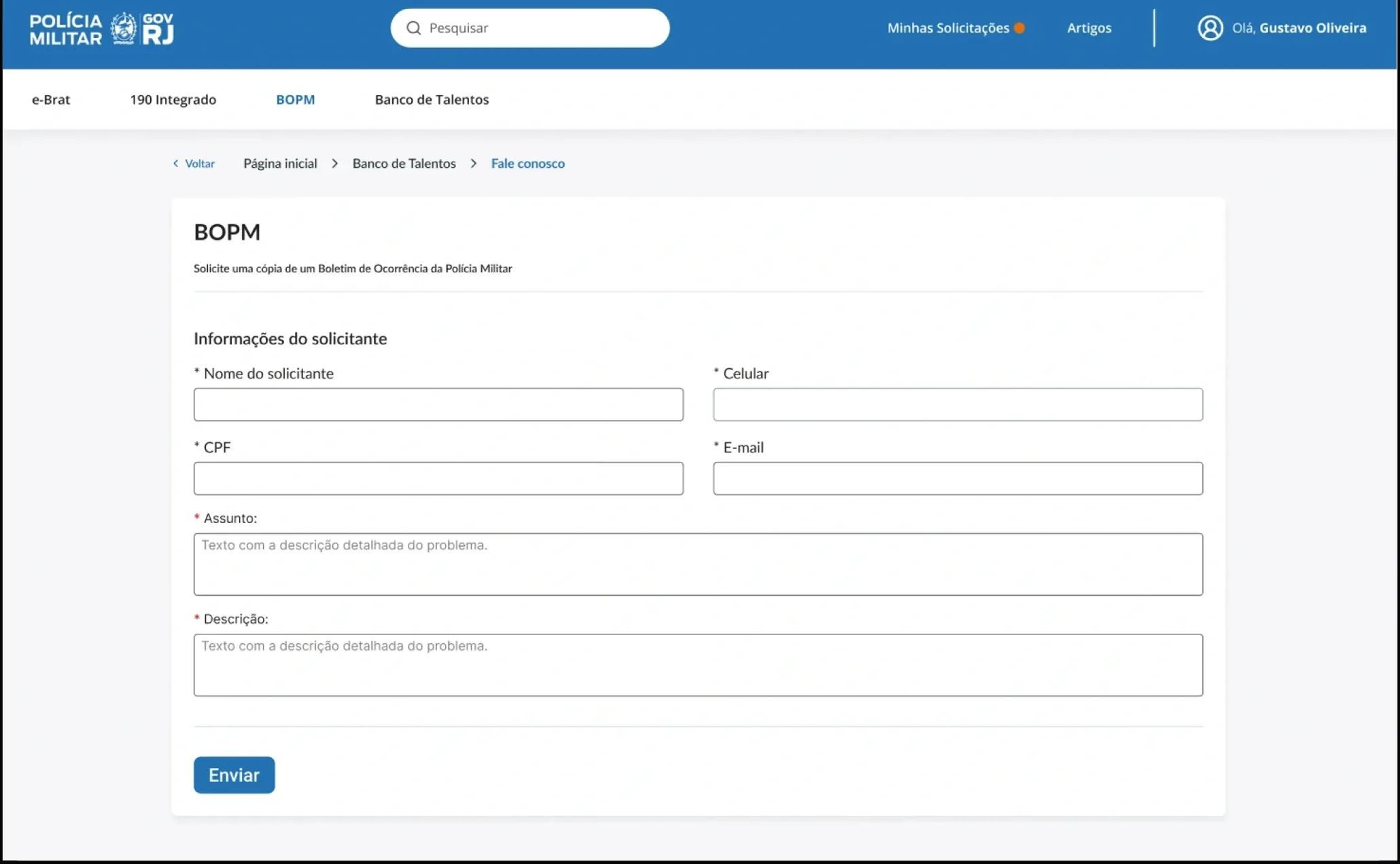
BOPM, e-Brat and 190 Integrado got their own request pages, built from the same form patterns.
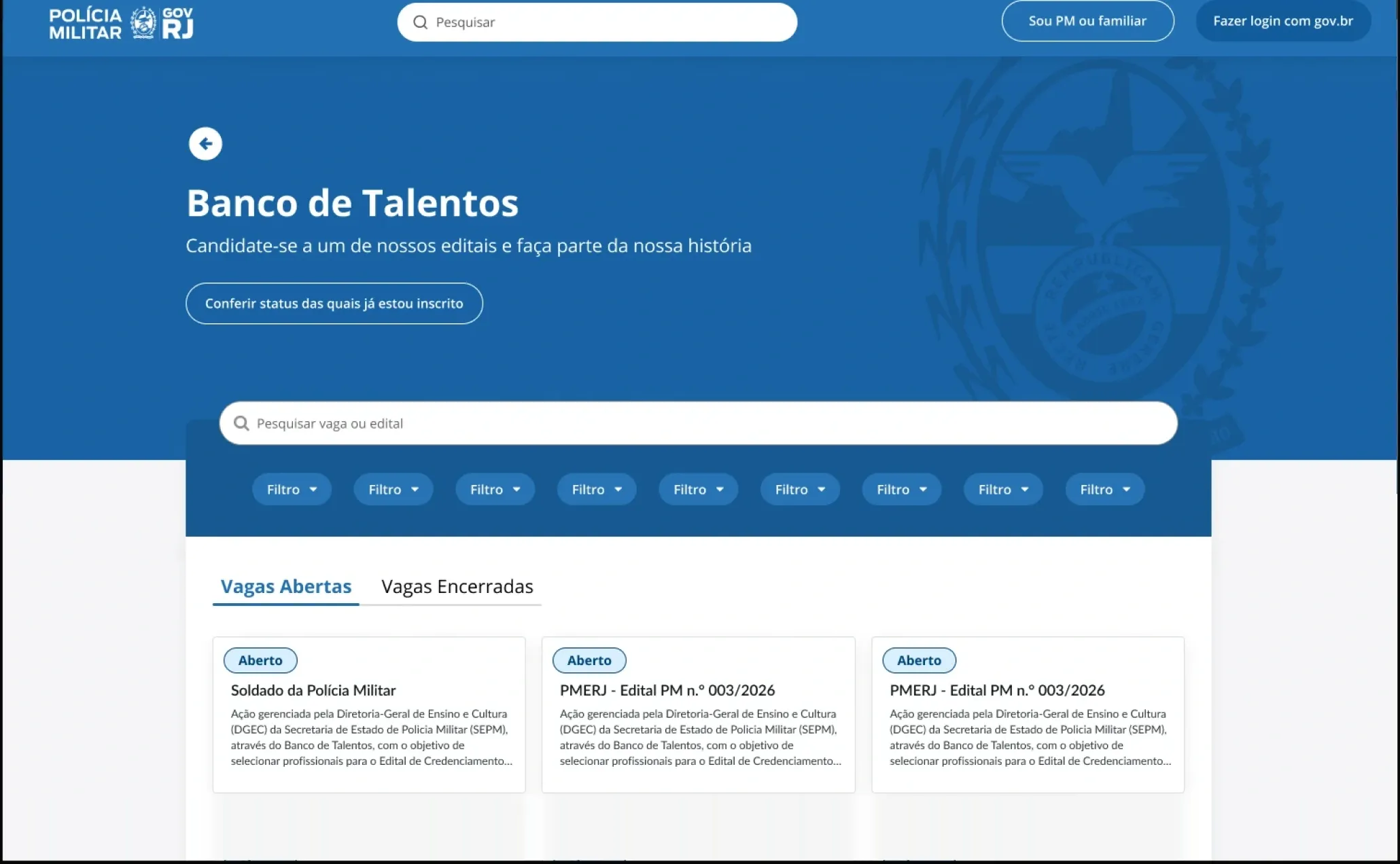
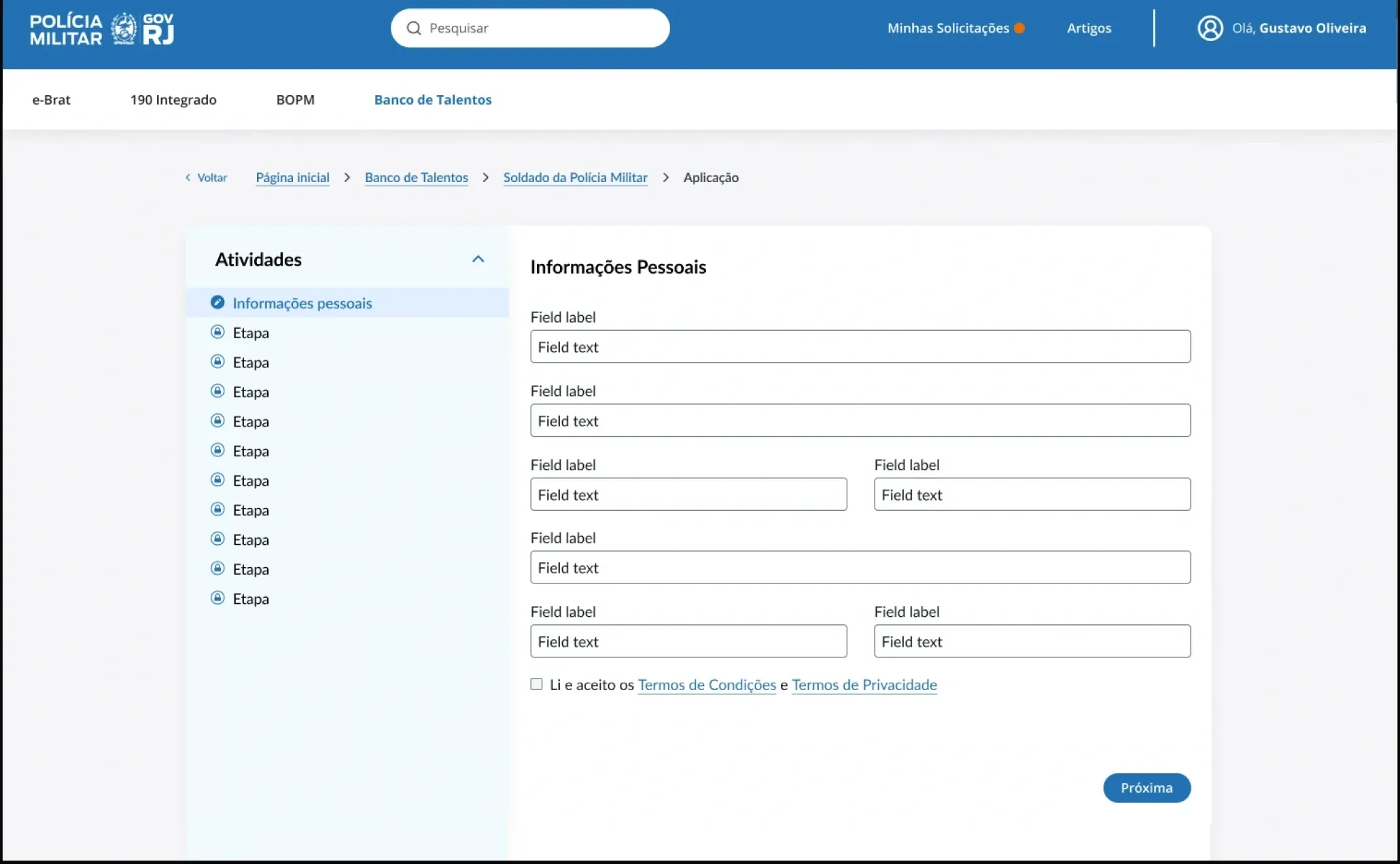
A talent bank with open and closed calls, filters, and a step-by-step application form.
The solution
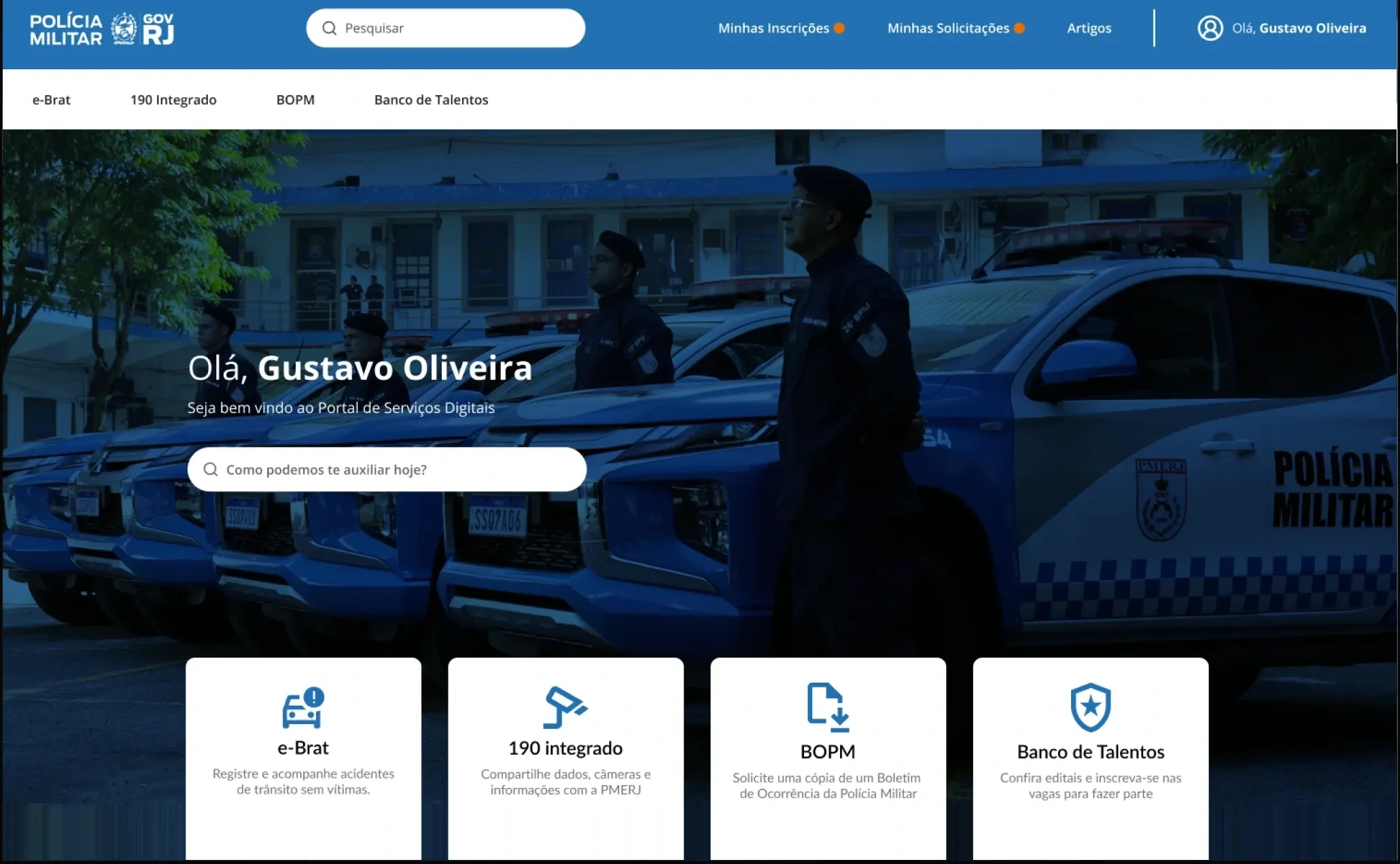
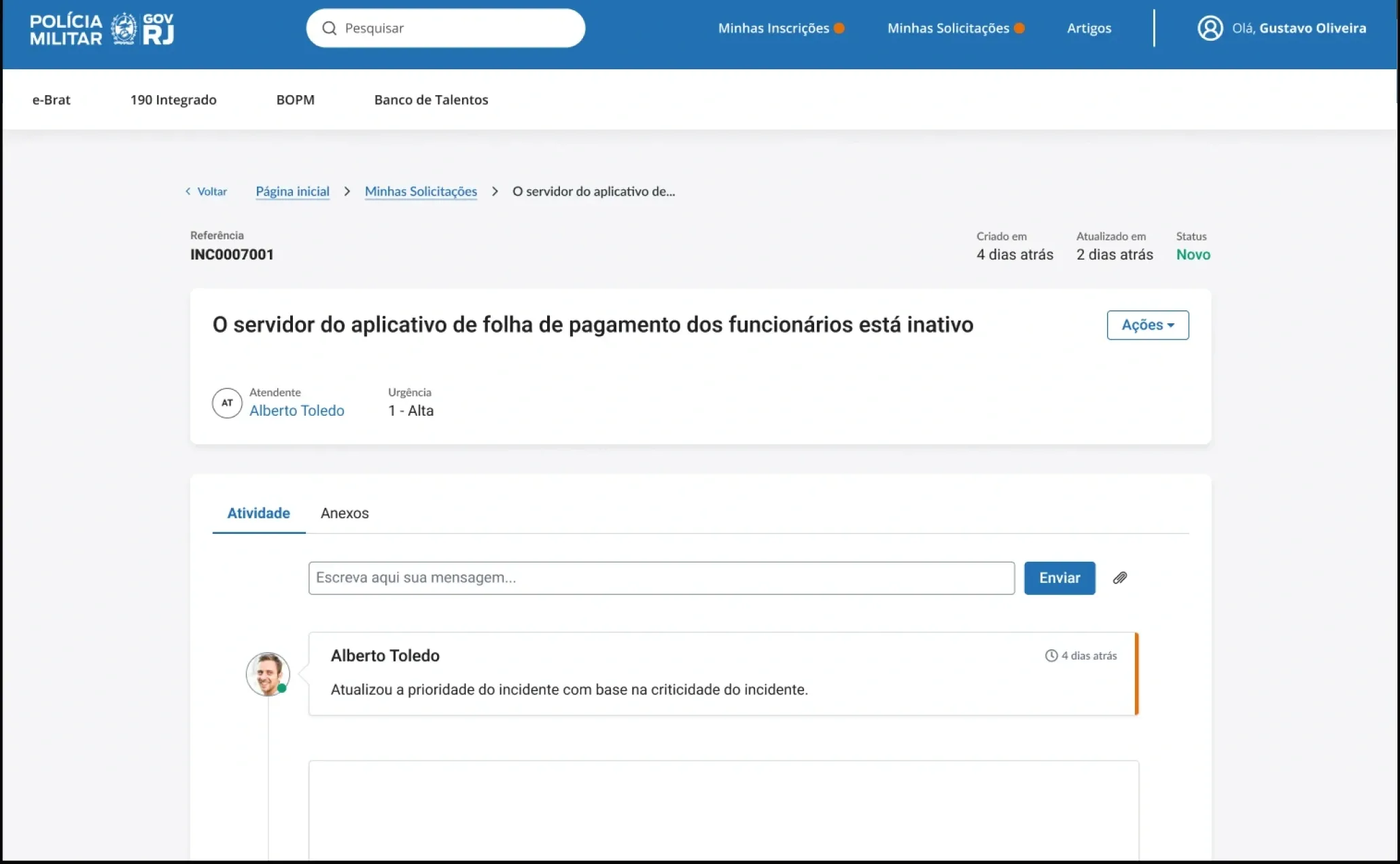
The portal opens on the four main services and a quick FAQ. After login, people track their requests and job applications from the same header.
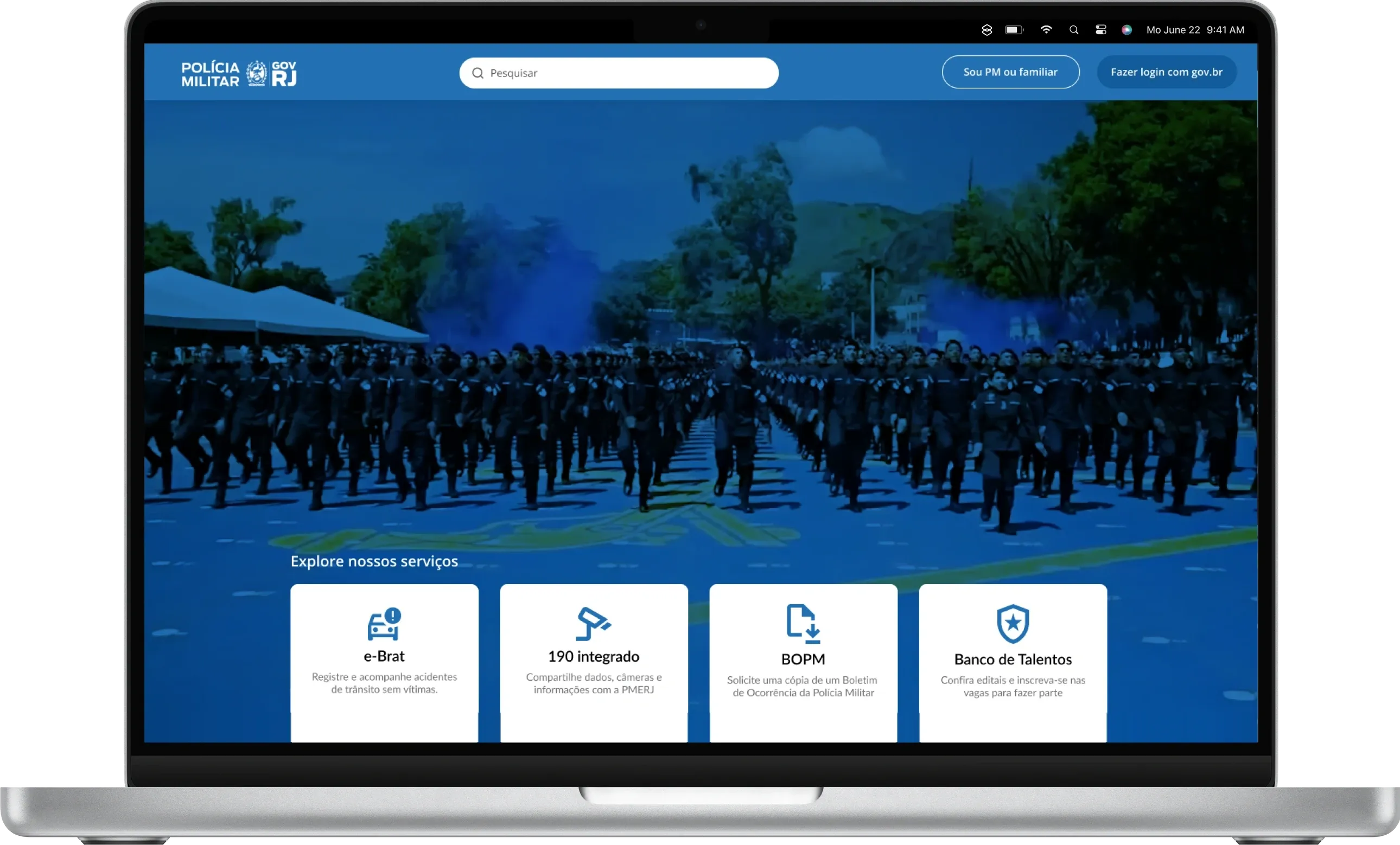
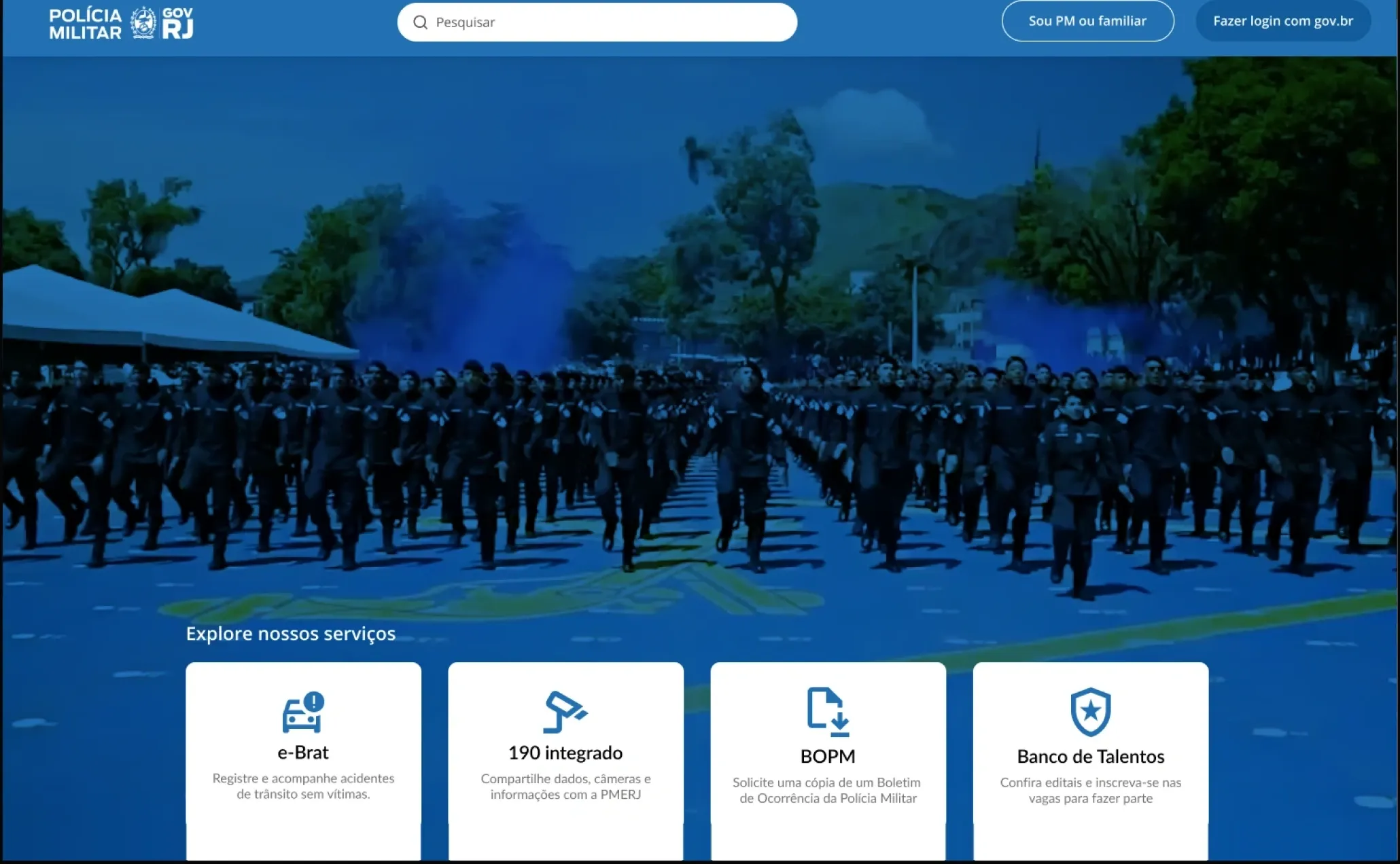
01 / 06Final UI — public home
The outcome
e-Brat, 190 Integrado, BOPM and the talent bank sit side by side on both public and logged-in homes.
Citizens log in with gov.br, and a separate entry lets officers and their families reach their own area.
Logged-in users follow each request’s activity and see the calls they applied to in My Applications.